
Hair loss can be scary and difficult to deal with. What might start as a few extra hairs coming out in the shower, can turn into a widening parting, thinning and even patching. For some people, the change happens slowly over several years, but for others, hair shedding can seemingly appear almost overnight.
Hair loss doesn’t have the same cause and although not all types of hair loss can be treated or resolved, it’s important to know what options are available to you if you are concerned about your hair loss.
Platelet-rich plasma, usually shortened to PRP, is one treatment that may be considered for people experiencing androgenic alopecia (pattern baldness), alopecia areata, telogen effluvium and to support individuals who have recently had a hair transplant.
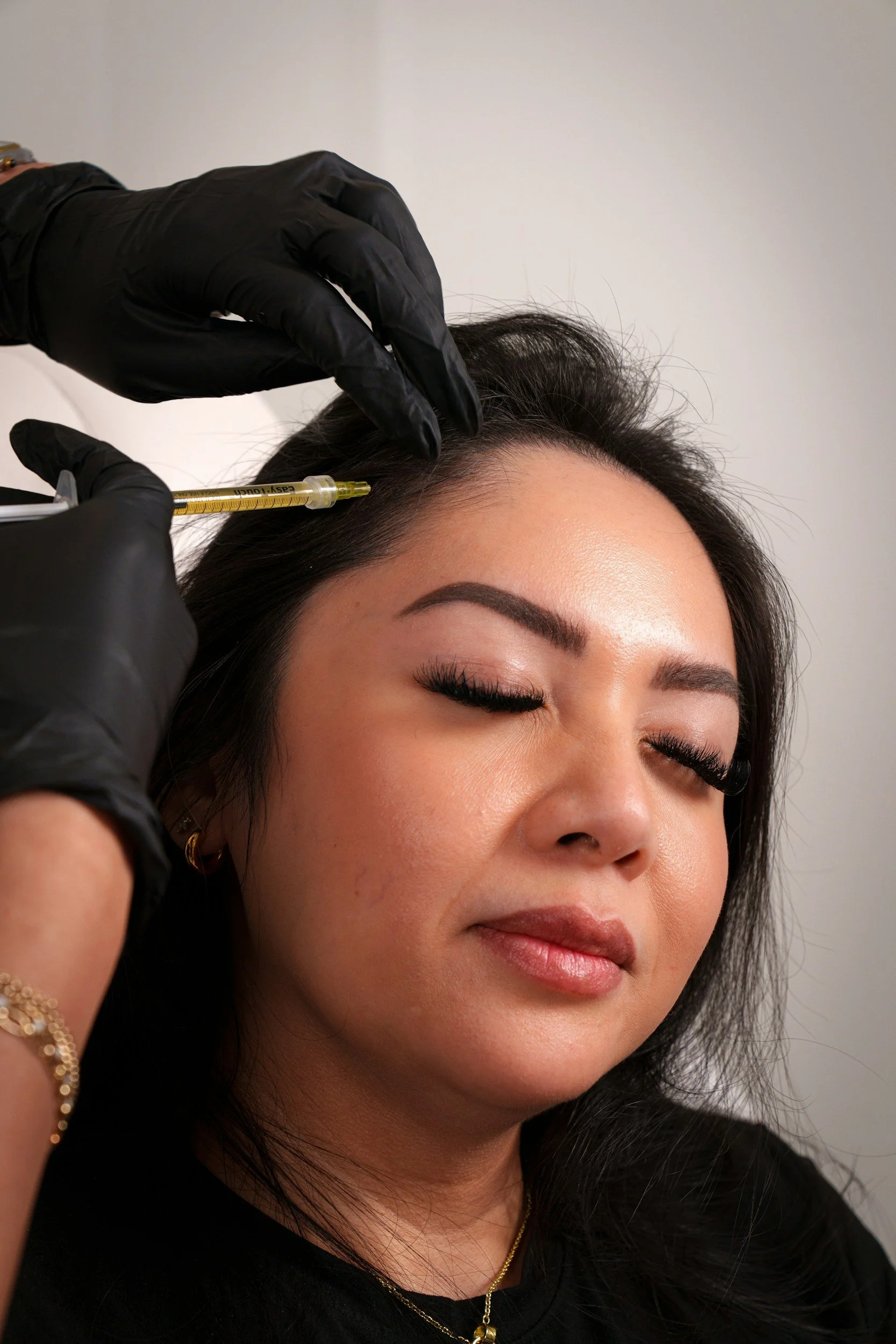
PRP uses a concentrated component of your own blood, which is prepared and injected into targeted areas of the scalp. The aim is to support existing hair follicles and scalp health rather than create entirely new follicles.
At our clinic in Edgbaston, Birmingham, we offer clinician-led PRP hair treatment for selected forms of hair loss. Every patient begins with an individual consultation because we first need to understand why your hair is thinning and whether PRP is actually an appropriate option for you.
Our current PRP hair-loss consultation costs £75, with treatment sessions currently priced at £250 per session.
Research into PRP for hair loss is continuing. Recent systematic reviews have found encouraging evidence that PRP can improve hair density and reduce hair loss in some patients, particularly those with androgenetic alopecia. However, studies use different preparation methods, treatment schedules and outcome measurements, which makes it difficult to predict exactly how an individual patient will respond.
This guide explains how PRP hair treatment works, which types of hair loss it may support, what happens during treatment and what you should realistically expect before deciding whether to proceed.
Key Takeaways
PRP stands for platelet-rich plasma and is prepared from a small sample of your own blood.
The plasma is injected into selected areas of the scalp where thinning or reduced hair density has occurred.
PRP does not create brand-new hair follicles.
It may be most appropriate where hair follicles are still present and capable of responding.
Research is most developed around male and female pattern hair loss, also known as androgenetic alopecia.
Recent reviews suggest PRP may improve hair density and reduce hair shedding in some patients, but results vary.
PRP is not guaranteed to restore lost hair and is not suitable for every cause of hair loss.
Hair loss should ideally be assessed before treatment because iron deficiency, hormonal changes, stress, illness and other medical factors can contribute.
Blood tests may sometimes be useful when the cause of hair loss is uncertain.
PRP treatment normally involves a blood draw, centrifugation and a series of small injections into the scalp.
Temporary tenderness, redness, swelling or mild bruising can occur afterwards.
The number of sessions required varies between patients.
Our clinic currently charges £75 for the initial consultation and £250 per PRP hair-loss treatment session.
What Is PRP Hair Treatment?
PRP stands for platelet-rich plasma and uses the plasma from a sample of your own blood to stimulate and regenerate cells in target areas. Plasma contains a high number of blood platelets. Although best known for their role in blood clotting, platelets also contain proteins and signalling molecules involved in tissue repair and cellular activity.
PRP utilises these platelets by extracting them from the blood and redirecting them to dormant or damaged cells to help them repair and regenerate.
In the case of hair loss, PRP does not create new hair follicles, what it does is encourage the existing follicles to wake up and start producing new hair after a dormant period.
What Types of Hair Loss May PRP Help?
Hair loss is affected by many different factors including:
Genetics
Illness
Stress
Cancer treatment
Weight loss
Iron deficiency
Research into PRP has focused particularly heavily on androgenetic alopecia (patterned baldness), but can also be used to treat alopecia areata, telogen effluvium and to support individuals who have recently had a hair transplant.
When Might PRP Not Be the Right Treatment?
There are several circumstances where PRP may not be the most useful first step.
The Cause of Hair Loss Is Unknown
If your hair has suddenly begun falling out and nobody knows why, we may need to investigate before discussing injections.
There Is an Underlying Medical Problem
Suppose you discover that your hair loss is primarily related to iron deficiency. PRP would not solve the iron deficiency and you may continue to experience hair loss. Injecting the scalp without addressing underlying medical issue misses an important part of the problem and means that you would have medical treatments without receiving any benefits.
It can be frustrating to wait gor the underlying issue to get better whilst experiencing hairloss but having PRP treatments would likely only cause further harm than providing benefits.
Hair Follicles Are No Longer Active
PRP does not manufacture new follicles. Where follicles have been lost or severely miniaturised, treatment may have limited potential.
Another Hair-Loss Condition Is Suspected
Some patterns of hair loss require dermatological assessment. For example, sudden patchy hair loss or signs of inflammation or scarring may need a different diagnostic pathway.
Your Expectations Are Not Realistic
If you expect one treatment session to restore an entirely bald area to its previous density, PRP is unlikely to meet that expectation.
A large part of a good consultation is agreeing on what treatment realistically may — and may not — achieve. PRP works with your existing hair follicles, stimulating them to begin growing new hair, which can take a little bit of time. It’s normal to have a few sessions of PRP before seeing results as it takes time for the hair to regrow and for the follicles to regenerate.
Do You Need Blood Tests for Hair Loss?
Not everybody experiencing hair loss needs a blood test, but they can be helpful when your symptoms and medical history suggest that an underlying health issue may be contributing.
Depending on the patient, possible areas to investigate may include:
Full blood count
Ferritin and iron
Thyroid function
Vitamin B12
Folate
Vitamin D
Hormones
Other biomarkers relevant to the clinical history
Iron and Ferritin
Iron deserves particular attention because deficiency can be associated with hair loss.
Ferritin provides information about stored iron, while other iron markers can give a broader picture of iron status.
The NHS specifically lists hair loss among the possible symptoms of iron-deficiency anaemia.
Thyroid Function
Changes in thyroid function can also contribute to hair-related symptoms in some patients.
Hormone Testing
Hormone tests may be considered when hair loss occurs alongside symptoms such as:
Irregular periods
Acne
Changes in body hair
Menopause symptoms
Testosterone concerns
Other signs suggesting endocrine involvement
We do not recommend every available blood marker to every patient, and we can recommend and create personalised blood tests where the consultation suggests that further investigation would be useful.
Does PRP Hair Treatment Hurt?
Most patients can expect some degree of:
Pressure
Pinching
Stinging
Temporary scalp sensitivity
People's sensitivity can vary considerably so if you are anxious about injections, please tell us so that we can make the experience more comfortable. If particularly concerned about the pain, then we may be able to administer local anaesthetic to your scalp before treatment to minimise any pain that you experience.
What Happens After Treatment?
PRP hair treatment usually has relatively little downtime.
Possible short-term effects include:
Redness
Tenderness
Mild swelling
Bruising
Scalp sensitivity
These are generally temporary.
Clinical studies have also reported short-term effects such as headache, scalp tightness, redness, swelling and minor post-injection bleeding. Our clinician will give you personalised aftercare instructions after your treatment and you can always reach out to us if you experience any problems.
Can You Go Back to Work?
Yes. Many people are able to return to ordinary activities relatively quickly.
However, please keep in mind exactly how the scalp looks and feels after treatment varies. If you have an important event immediately afterwards, bear in mind that some temporary redness or tenderness may be visible.
How Many PRP Sessions Might You Need?
There is no universal treatment schedule that works for everybody.
An umbrella review of PRP research in androgenetic alopecia found that protocols frequently involved at least three treatments spaced around one month apart, although the authors also highlighted the need for more standardisation.
At our clinic, the number of sessions is determined individually. We may recommend a short initial course and then review how your scalp and hair have responded before deciding whether further or maintenance treatment is appropriate.
When Might You Notice a Change?
Hair growth is slow and PRP is not a treatment where you should expect your hair to look dramatically different the following week. Hair follicles move through biological growth cycles that take months, so meaningful assessment of treatment usually takes time.
We find that the best way of consistently monitoring your treatment is by taking regular photographs of progress. It’s best to keep the lighting, style of hair and camera angle the same to get the most accurate measure of any change.
Can PRP Be Combined With Other Hair-Loss Treatments?
Potentially. Hair-loss management does not always need to involve choosing one treatment and rejecting everything else.
Depending on the diagnosis, a broader treatment plan may involve:
PRP
Topical treatment
Prescription medication
Correction of nutritional deficiency
Management of an underlying medical condition
Dermatology referral
Hair-restoration surgery in selected cases
Research has also investigated PRP used alongside treatments such as minoxidil, although protocols vary and more standardised research is needed.
PRP Hair Treatment at Our Birmingham Clinic
Our clinic is based at:
38 Harborne Road
Edgbaston
Birmingham
B15 3EB
We provide clinician-led PRP hair-loss treatment for men and women experiencing selected forms of thinning hair and reduced hair density.
Our Current Prices
Our current PRP hair-loss pricing is:
Initial PRP hair consultation — £75
PRP hair-loss treatment — £250 per session
The treatment plan and number of sessions are confirmed following assessment.
What happens at a PRP Hair Treatment Consultation
Step 1: Book Your Consultation
We begin by understanding your hair loss.
We will discuss:
When it started
How quickly it has progressed
Which areas are affected
Medical history
Medication
Previous treatments
Family history
Relevant hormonal or nutritional symptoms
Step 2: Scalp and Suitability Assessment
We assess the scalp and consider whether the pattern of hair loss appears suitable for PRP.
The central question is:
Are there existing follicles that PRP may reasonably be able to support?
If we do not think PRP is appropriate, we will tell you.
Step 3: Consider Further Investigation
Where the clinical picture suggests another possible cause, we may discuss additional assessment.
This could include personalised blood testing for areas such as:
Iron and ferritin
Thyroid function
Vitamins
Hormones
We offer these services within our clinic where clinically appropriate.
Step 4: Agree Your Treatment Plan
If PRP appears suitable, we explain:
How treatment works
What the injections involve
Likely side effects
Realistic expectations
Proposed number of sessions
Cost
Follow-up
You can then decide whether you want to proceed.
Step 5: PRP Treatment
During the treatment appointment:
A blood sample is taken
↓
The blood is centrifuged
↓
The platelet-rich plasma is prepared
↓
PRP is injected into selected areas of the scalp
↓
Aftercare advice is provided
Your Treatment Is Clinician-Led
Our PRP service is provided by experienced clinicians rather than functioning as a standalone cosmetic sales service.
Hair loss can have medical, hormonal and nutritional contributors.
Having access to private GP consultations and personalised blood testing within the same clinic allows us to consider those possibilities where they are relevant.
Frequently Asked Questions
What is PRP hair treatment?
PRP stands for platelet-rich plasma. A small sample of your blood is collected and processed in a centrifuge to separate and prepare the platelet-rich component. This is then injected into selected areas of the scalp affected by thinning or reduced density.
Does PRP regrow hair?
Research suggests PRP may improve hair density and reduce hair loss in some patients, particularly those with androgenetic alopecia. However, results vary and PRP cannot be guaranteed to regrow lost hair.
Can PRP create new hair follicles?
No. PRP does not create brand-new follicles. It is intended to support follicles that are already present, which is why suitability assessment is important before treatment.
Is PRP suitable for male pattern baldness?
PRP has been studied particularly extensively in androgenetic alopecia, including male pattern hair loss. It may be considered where existing follicles remain in areas of thinning, but suitability and expected response vary between patients.
Can women have PRP hair treatment?
Yes. PRP has also been studied in female pattern hair loss. A 2024 systematic review found improvements in hair density and thickness across studies of women receiving PRP, although responses and treatment protocols varied.
Does PRP work for every type of hair loss?
No. Hair loss can be caused by genetics, illness, stress, weight loss, iron deficiency and numerous other factors. The cause should ideally be assessed before deciding whether PRP is appropriate.
Should I have blood tests before PRP?
Not everybody needs blood testing. However, where symptoms or medical history suggest that iron deficiency, thyroid problems, hormonal changes or another health condition could be contributing, further investigation may be useful before or alongside treatment.
Does PRP hair treatment hurt?
PRP involves multiple small injections into the scalp, so some discomfort can occur. Most patients tolerate the procedure well. Temporary scalp tenderness or sensitivity may occur afterwards.
What are the side effects of PRP hair treatment?
Possible short-term effects include tenderness, redness, swelling, bruising and minor bleeding at injection sites. Studies generally report predominantly local and temporary adverse effects.
Is there downtime after PRP?
Downtime is generally limited, and many patients return to normal activities relatively quickly. Temporary redness, sensitivity, swelling or mild bruising can occur.
How many PRP hair treatments will I need?
There is no single schedule suitable for everyone. Research protocols commonly involve several initial treatments, often approximately a month apart, while our own treatment plans are tailored according to your hair loss and response.
How quickly does PRP work for hair loss?
PRP does not produce immediate hair growth. Hair follicles operate on relatively slow growth cycles, so changes usually need to be assessed over months rather than days. Results vary between patients.
Is PRP better than minoxidil?
Current evidence does not establish PRP as universally superior to minoxidil. A recent meta-analysis found no clear advantage in several major outcomes, although some measures and patient satisfaction favoured PRP. The appropriate treatment depends on the individual.
Is PRP available on the NHS for hair loss?
PRP is not routinely offered by the NHS as a treatment for pattern hair loss and is generally accessed privately.
How much is PRP hair treatment at your Birmingham clinic?
Our current initial PRP hair-loss consultation costs £75. PRP hair-loss treatment currently costs £250 per session. The number of sessions recommended depends on your individual assessment and treatment plan.
Where is your PRP hair clinic in Birmingham?
Our clinic is located at 38 Harborne Road, Edgbaston, Birmingham, B15 3EB. We offer clinician-led PRP hair-loss consultations and treatment alongside private GP and personalised blood-testing services.
